Standard 4

Learning Designer

Coaches model and support educators to design learning experiences and environments to meet the needs and interests of all students.
Artifact #1: Synchronous and Asynchronous Learning
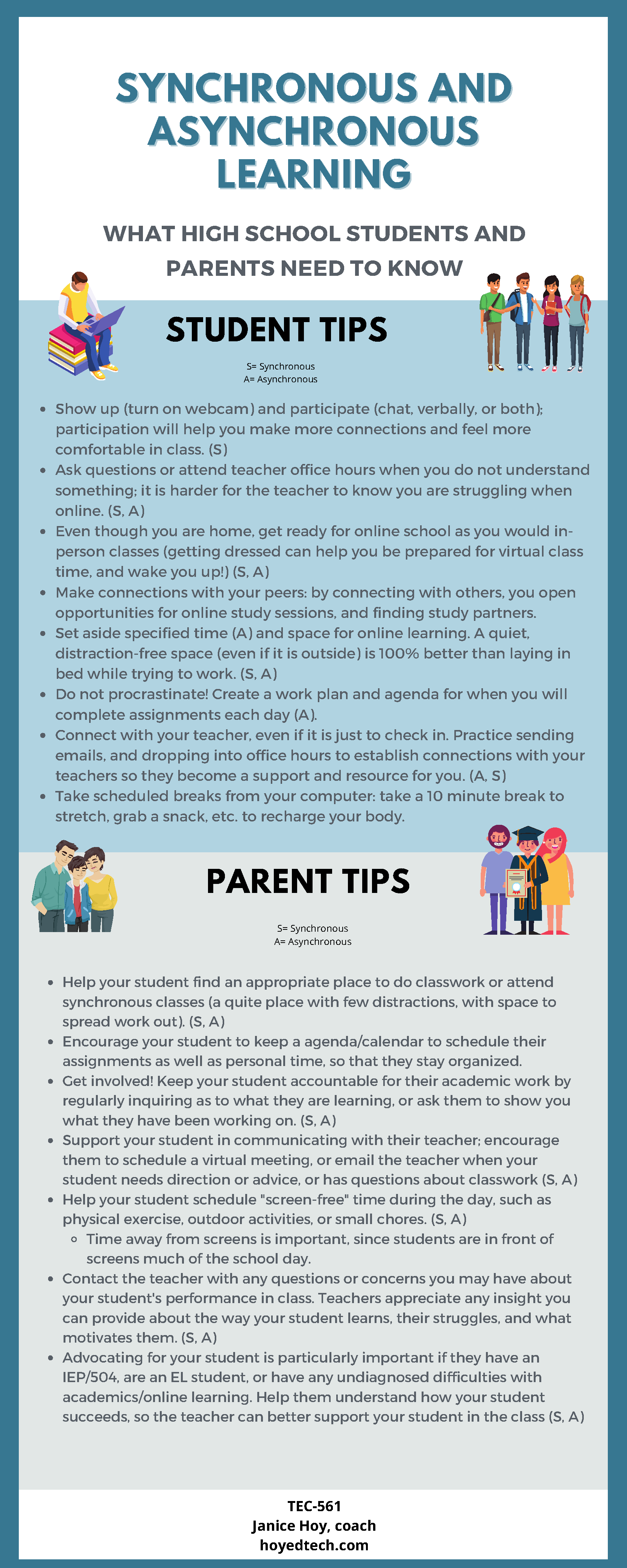
Synchronous and Asynchronous Learning
Description
ISTE Standard/Rationale
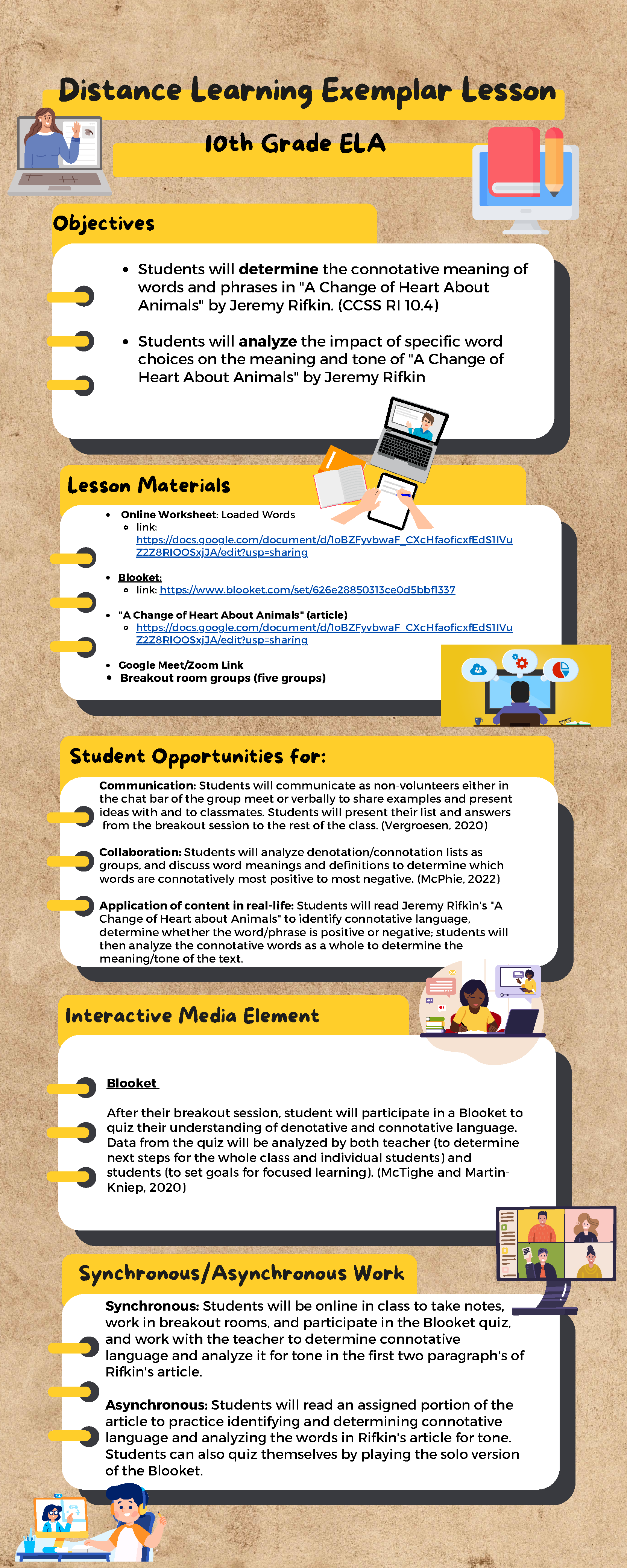
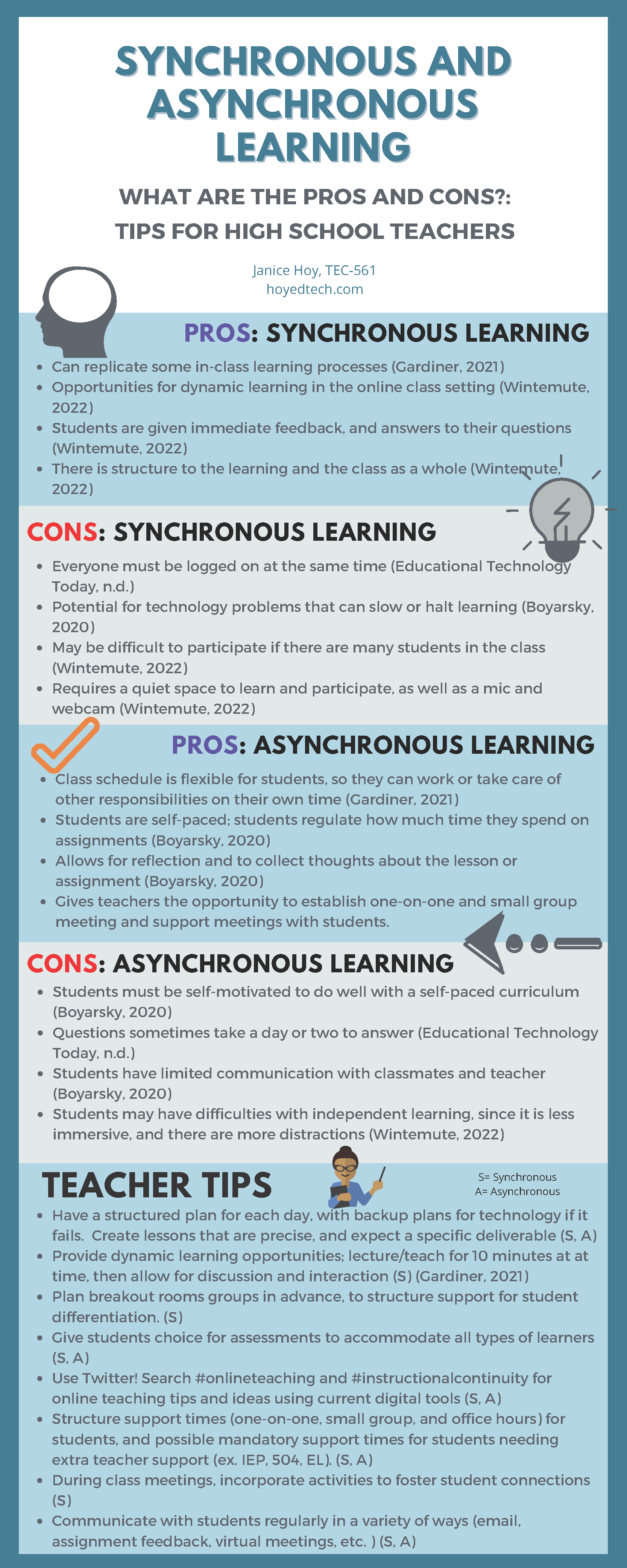
The infographic created in TEC-561: Multimedia Instructional Strategies and Methods highlights the pros and cons of synchronous and asynchronous learning, and gives teachers, parents, and students tips on navigating the online classroom, and what skills and habits will be needed to be successful.
Synchronous and Asynchronous Learning
ISTE Standard

4d: Model the use of instructional design principles with educators to create effective digital learning environments. 

Rationale

This infographic represents ISTE Standard 4 because it is imperative that educators understand how to best approach distance learning (or any other online learning environment).  By sharing the pros and cons of synchronous and asynchronous learning, coaches can support teachers on how to best use a variety of digital tools and strategies to best run their class, but also to create meaningful learning experiences for the students.

Synchronous and Asynchronous Learning
Artifact #2: Exemplar Distance Learning Lesson
Exemplar Distance Learning Lesson
Description
ISTE Standard/Rationale
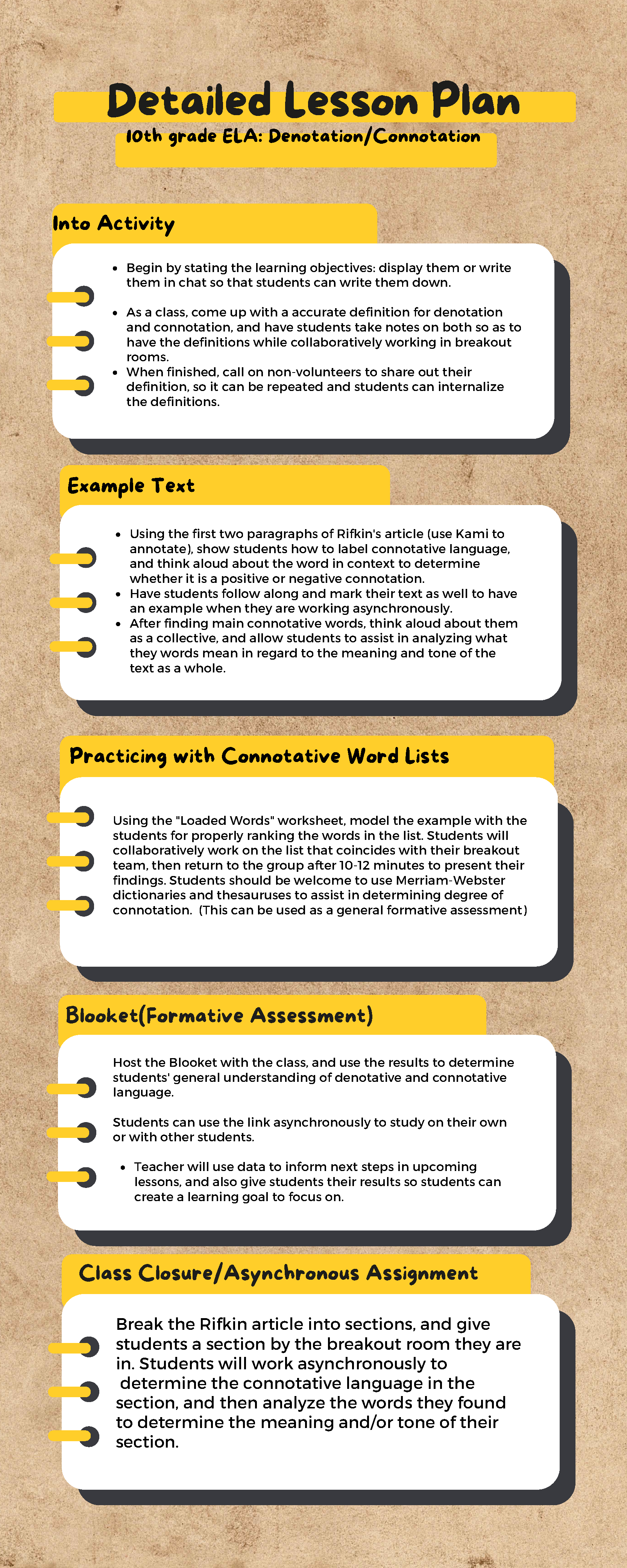
The exemplar lesson which was created in TEC-541: Distance Learning, models how to incorporate digital tools into a distance learning lesson, and what strategies and activities would work in conjunction with those tools. As teachers build their own lesson plans, this artifact can serve as a guide, as well as to create a collaborative conversation between the coach and teacher.
Exemplar Distance Learning Lesson
ISTE Standard

4d: Model the use of instructional design principles with educators to create effective digital learning environments.

Rationale

The exemplar lesson represents ISTE standard 4 because the infographic models how teachers can/should incorporate digital tools into their curricular plans. It is important to model digital tool use to support teachers’ incorporation of digital tools into their lessons and become learning designers themselves to support students’ technological growth, and academic improvement.

Exemplar Distance Learning Lesson
Artifact #3: Online Engagement Strategies & Tools for Distance Learning
Online Engagement Strategies & Tools for Distance Learning
Description
ISTE Standard/Rationale
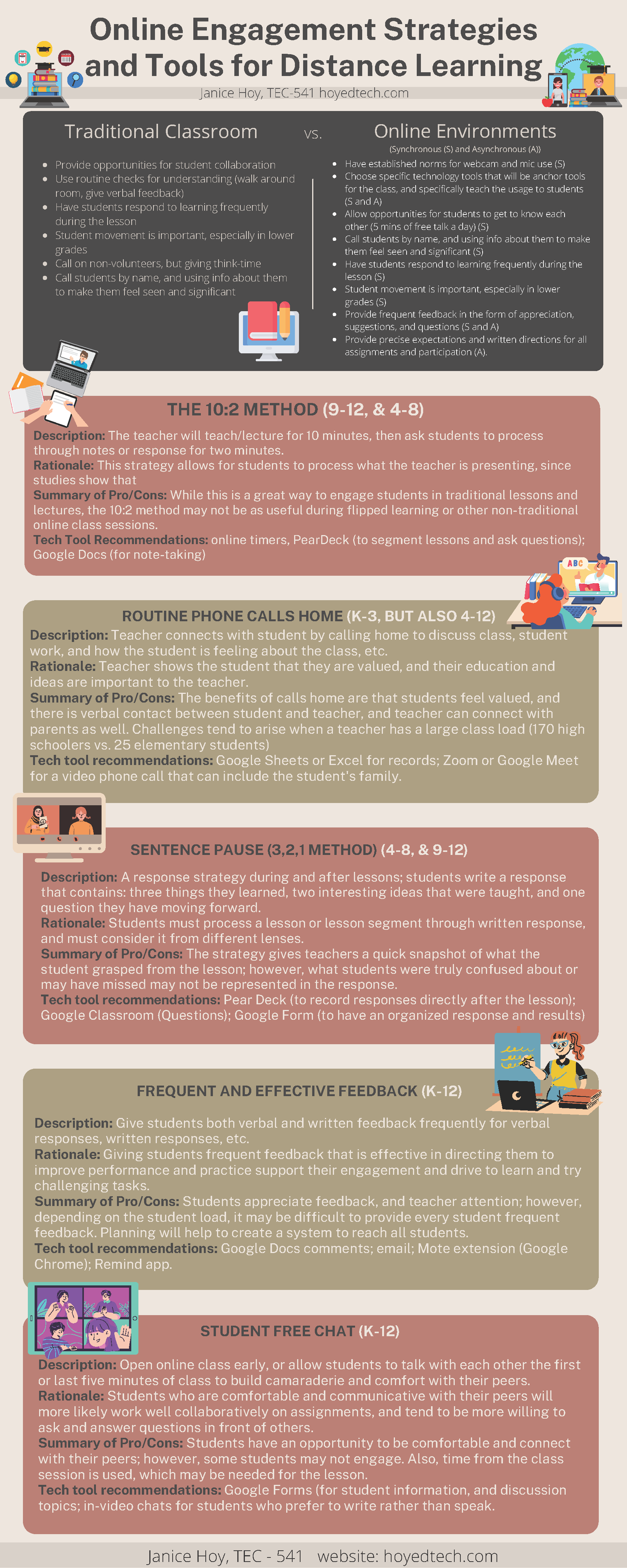
The infographic created in TEC-541: Distance Learning, outlines a variety of strategies that benefit the online learning environment, then pairs digital tools with the strategies to enhance the strategy to improve student engagement and learning. Used as a collaborative tool, the coach can use the infographic to start discussions about curriculum with educators, and how best to embed technology to promote student success.
Online Engagement Strategies & Tools for Distance Learning
ISTE Standard

4a: Collaborate with educators to develop authentic, active learning experiences that foster student agency, deepen content mastery and allow students to demonstrate their competency.

Rationale

This artifact represents ISTE Standard 4 because the infographic can serve as a conversation starter in a for the coach and teacher(s) to discuss how to best approach distance learning, and how to utilize established tools and strategies in the distance learning classroom to create more meaningful learning experiences and make the best use of the time in the live classroom to support student success.
Online Engagement Strategies & Tools for Distance Learning
Dinuba, CA 93618
Contact Janice
pencilchevron-down