Standard 1

Change Agent

Coaches inspire educators and leaders to use technology to create equitable and ongoing access to high-quality learning.
Artifact #1: Personal Philosophy
Statement of Philosophy
Description
ISTE Standard/Rationale
What is the Role of Technology Integration in the Classroom
As 21st century educators, we are expected to integrate technology into our classrooms to enhance curriculum and support our students in the learning process. We are trained in various technology platforms and tools, and while some educators quickly digest the information and integrate the technology into the classroom, there are others that struggle to embrace technology and use it to support learning.

As a technology coach, meeting teachers where they are comfortable with technology is of utmost importance, my goal is to guide each teacher I work with to identify areas of need in student learning in the classroom, and once identified, incorporate appropriate technology tools into the curriculum that are highly effective, but also accessible and easy for a teacher to use. Not every teacher feels comfortable with integrating technology into the classroom; my mission as a technology coach is to walk beside each teacher in the learning process so they become confident, effective, and empowered 21st century educators.

To effectively support my colleagues, my practice and strategy is to work one-on-one with teachers, or in very small groups so teachers feel comfortable as they learn, and they are assured that they are the focus of my attention. I commit to continue to be well-read and learn through Professional Learning Networks (PLNs) so as to stay up-to-date on new educational technologies, listen to EdTech podcasts, learn new teaching strategies, and share creative ways to use new and existing technology tools. I commit to not only learning new and effective technologies, but also strive to better equip teachers to use established and existing educational technology more effectively.
Personal Philosophy
I wrote my personal philosophy in TEC-516: Instructional Theories and Models in Technology Education; as an edtech coach, it has helped focus not only my expectations for myself, but also my vision for the educators that I work with. When someone visits my website, they will be able to see how I approach coaching, and what they can expect when working with me.
Personal Philosophy
ISTE Standard

1a: Create a shared vision and culture for using technology to learn and accelerate transformation through the coaching process.

1c: Cultivate a supportive coaching culture that encourages educators and leaders to achieve a shared vision and individual goals.

1e: Connect leaders, educators, instructional support, technical support, domain experts and solution providers to maximize the potential of technology for learning.

Rationale

My personal philosophy supports ISTE Standard 1 in that it shares my vision as an edtech coach with others; the philosophy promotes a culture of learning and support to educators, and a commitment to the coaching educators in understanding how to utilize technology and digital tools to promote student success in their classes.

Personal Philosophy
Artifact #2 Assistive Technologies and Wiki
Assistive Technologies and Wiki
Description
ISTE Standard/Rationale
Description
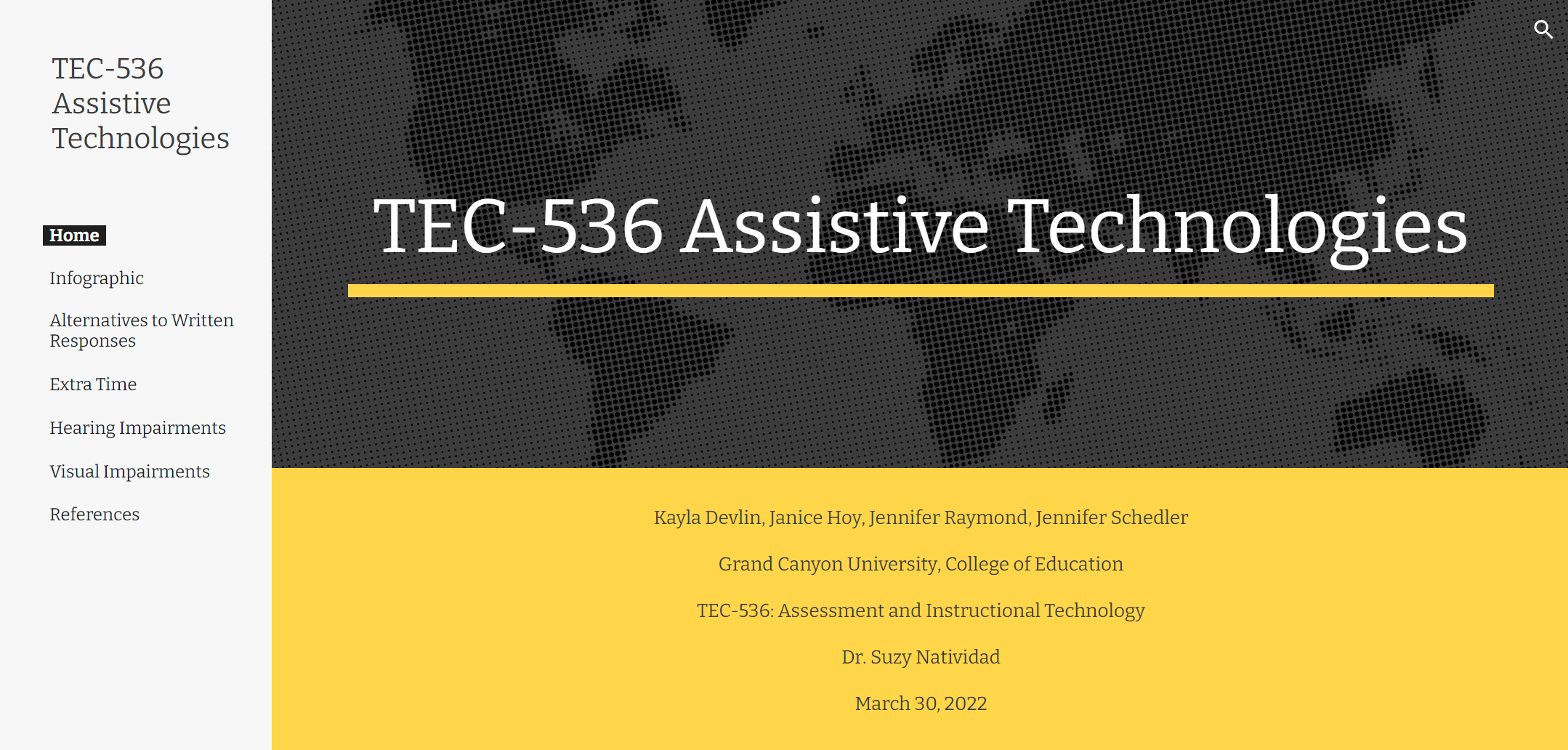
The above Google Site was collaboratively created in TEC-536: Assessment and Instructional Technology to address the need for more understanding of what assistive technologies are, and how they can be used in the classroom in a variety of ways. The artifact shows how some typical digital tools can be assistive technologies depending on how they are used, and brings awareness to some lesser-known tools that may be overlooked.
Assistive Technologies and Wiki
ISTE Standard

1b: Facilitate equitable use of digital learning tools and content that meet the needs of each learner. 

Rationale

This artifact represents ISTE Standard 1 because assistive technologies promote equitable access to learning in the classroom, and it is important for coaches to facilitate the use of these technologies with the students who need them. By presenting these technologies to teachers and facilitating their integration into curriculum, students can feel supported in their journey to academic success.

Assistive Technologies and Wiki
Artifact #3: Technology-Based Tools for Project-Based Learning
Technology-Based tools for
Project-Based Learning
Description
ISTE Standard/Rationale
Description
This padlet resource was created for TEC-561: Multimedia Instructional Strategies and Methods, and shares a variety of technology-based tools for educators to considers as they work to incorporate project-based learning into the classroom; the in-depth explanations and descriptions allow coaches to facilitate the exploration of technology to choose the appropriate programs and tools to serve a variety of students. Each tool has been categorized for synchronous or asynchronous learning, or both, so as to assist teachers in choosing an appropriate tool or program to create project-based learning opportunities for their students.
Technology-Based tools for Project-Based Learning
ISTE Standard

1b: Facilitate equitable use of digital learning tools and content that meet the needs of each learner. 

Rationale

The project-based learning artifact represents ISTE Standard 1 by reimagining the traditional classroom, and allowing learning to take place with the teacher as a facilitator rather than a lecturer. Because every student is unique, project-based learning places a variety of options and decisions in the hands of the students, while the teacher supports each student as needed through the process. As coaches, we want to be that same support to the teacher so that they feel more confident in incorporating digital tools and methods that will benefit all learners. 

Technology-Based tools for Project-Based Learning
Artifact #4: Peer Coaching Techniques
Peer Coaching Techniques
Description
ISTE Standard/Rationale
Description
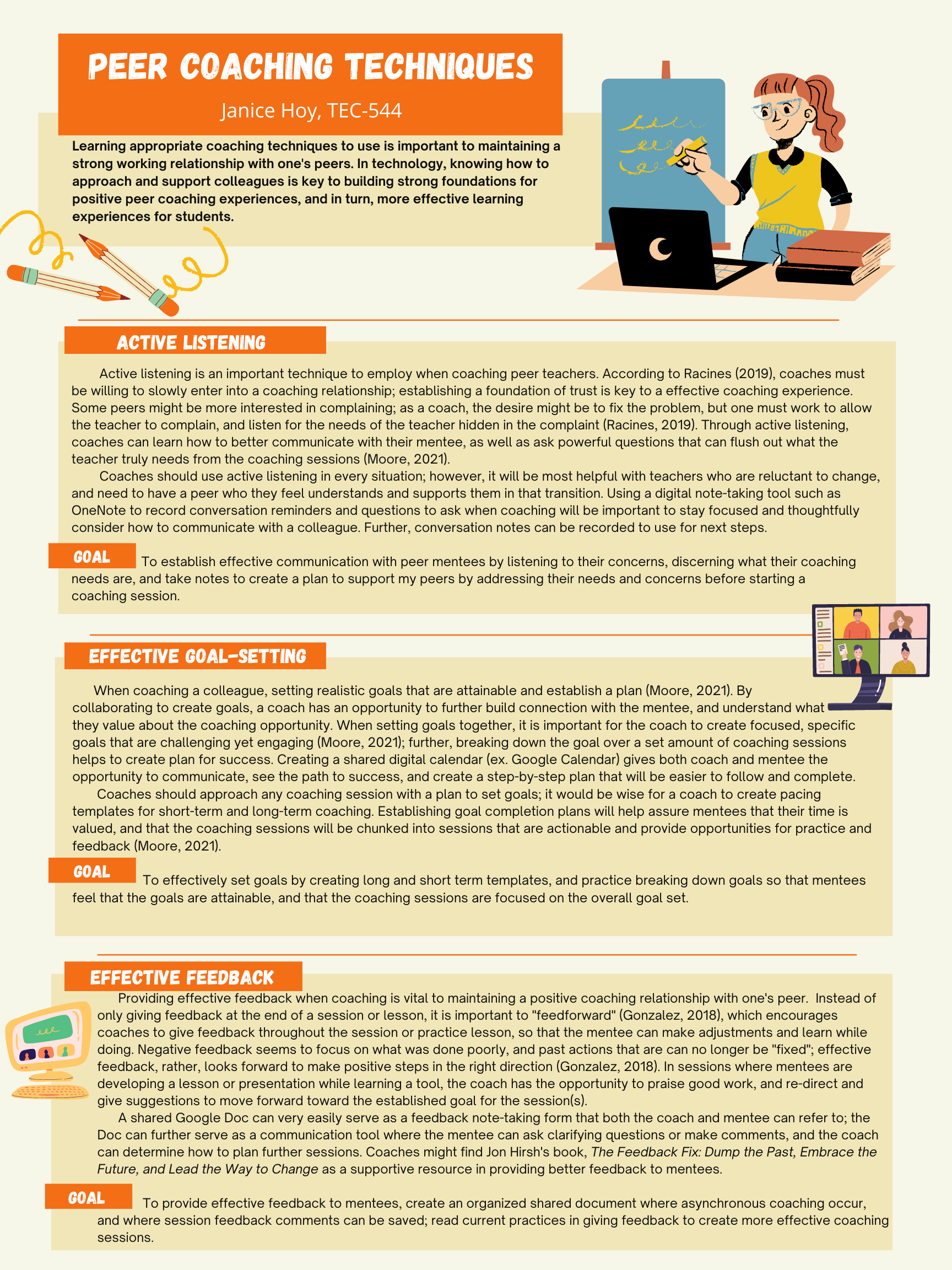
The infographic I created in TEC-544: Leadership and Technology Coaching shares key coaching techniques that will serve as a guide to coaches who may be starting in their coaching career, or many need to re-focus themselves if they are finding themselves ineffective. The techniques presented primarily focus on coaching peers, though the techniques can be used in other ways.
Peer Coaching Techniques
ISTE Standard

1c: Cultivate a supportive coaching culture that encourages educators and leaders to achieve a shared vision and individual goals.

Rationale

The artifact represents ISTE Standard 1 in that the techniques presented focus on a “supportive coaching culture”; coaching peers can be a difficult task, so technique and approach are imperative in building a trusting, supportive connection with the peers one coaches. By encouraging others instead of dictating directions, coaches can build lasting connections with their peers by being the person they trust when they are confused, or have questions about implementing technology into their curriculum.

Peer Coaching Techniques
Dinuba, CA 93618
Contact Janice
hourglasschevron-down