Standard 7

Digital Citizen Advocate

Coaches model digital citizenship and support educators and students in recognizing the responsibilities and opportunities inherent in living in a digital world.
Artifact #1: Managing the Online Classroom
Managing the Online Classroom
Description
ISTE Standard/Rationale
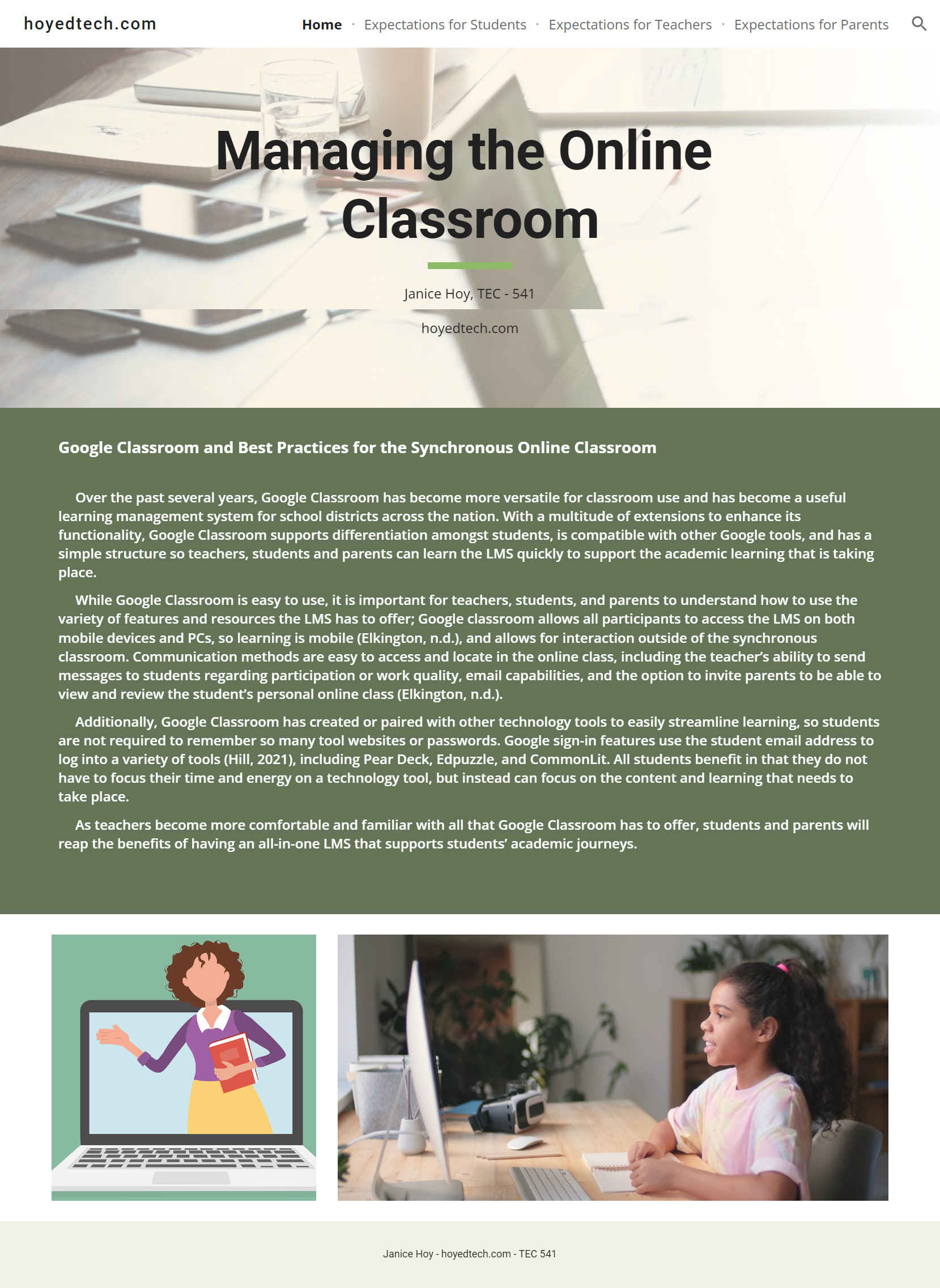
The site created in TEC-541: Distance Learning shares expectations for online practices and behavior for students, parents, and teachers. The site outlines the general expectations that students, parents, and teachers should meet when attending distance learning classes; the expectations include how to communicate, healthy habits to maintain, how parents can support their student, and what practices teachers should maintain to create a well-managed online learning environment.
Managing the Online Classroom
ISTE Standard

7b: Partner with educators, leaders, students, and families to foster a culture of respectful online interactions and a healthy balance in their use of technology.  

Rationale

The site represents ISTE Standard 7b in that there are many important factors in creating a manageable, well-run online learning community; the stakeholders, mainly teachers, parents, and students should understand what is expected of them. By partnering to establish expectations for online classrooms for the students, parents, and even the teacher, the path to student improvement will be much clearer for all stakeholders.

Managing the Online Classroom
Artifact #2: Cultural and Digital Literacies Resource
Cultural and Digital Literacies Resource
Description
ISTE Standard/Rationale
The resource created in TEC: 521: Digital Literacies, Virtual Tools and New Media urges teachers and students to consider the broader use of technology and digital resources to reach beyond the classroom walls to explore the world around them and connect with other students and cultures from around the world. The resource shares five different opportunities to give students the opportunity to connect with the global community, through culture-rich lessons, and interactions and collaborations with students from around the globe.
Cultural and Digital Literacies Resource
ISTE Standard

7a: Inspire and encourage educators and students to use technology for civic engagement and to address challenges to improve their communities.

Rationale

This artifact represents ISTE Standard 7 in that it encourages teachers and students to rethink what learning looks like and allows for new learning experiences, engagement, and a deeper understanding of the global society. By encouraging students to enter and interact with global issues and learn about various cultures, teachers give students a deeper understanding of the world they live in. 

Cultural and Digital Literacies Resource
Artifact #3: Responsible Use Policies Video
Responsible Use Policies Video
Description
ISTE Standard/Rationale
The video artifact created in TEC-530: Ethics, Culture, and Equity with Technology addresses digital citizenship, and the need for students to have direction when navigating the internet and various online programs and tools. The video shares ideas and tips for teachers to use to establish and maintain a healthy online environment for their students, and ways to teach students how to be responsible when working online.
Responsible Use Policies Video
ISTE Standard

7b: Partner with educators, leaders, students and families to foster a culture of respectful online interactions and a healthy balance in their use of technology.

7d: Empower educators, leaders and students to make informed decisions to protect their personal data and curate the digital profile they intend to reflect.

Rationale

This video artifact represents ISTE standard 7 in that the information presented advocates to empower teachers to share safe, healthy online behavior tips and expectations to teach students that being well-balanced and being aware of how they present themselves digitally to others and on social media is important to their safety and integrity.

Responsible Use Policies Video
Artifact #4: Digital Best Practices
Digital Best Practices
Description
ISTE Standard/Rationale
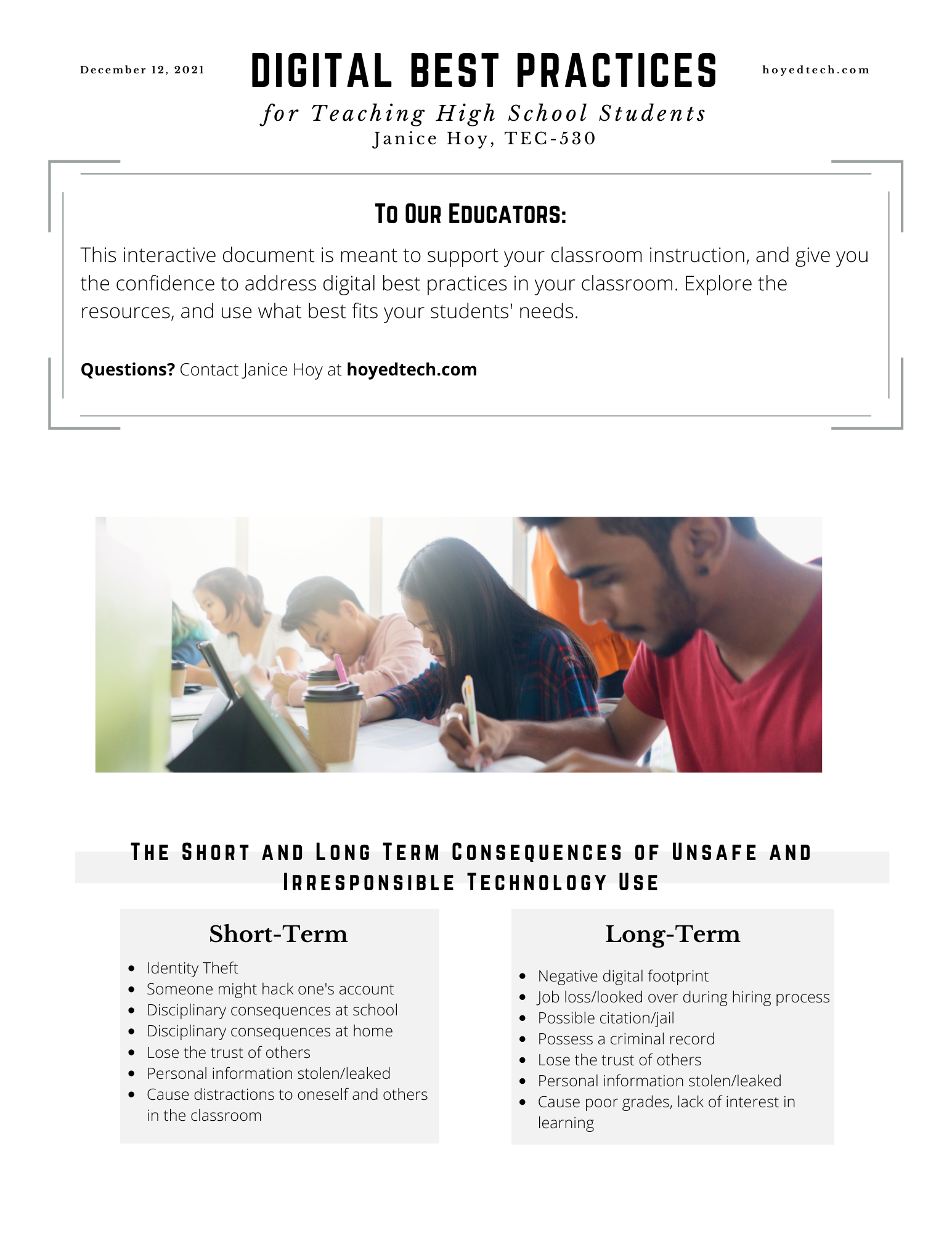
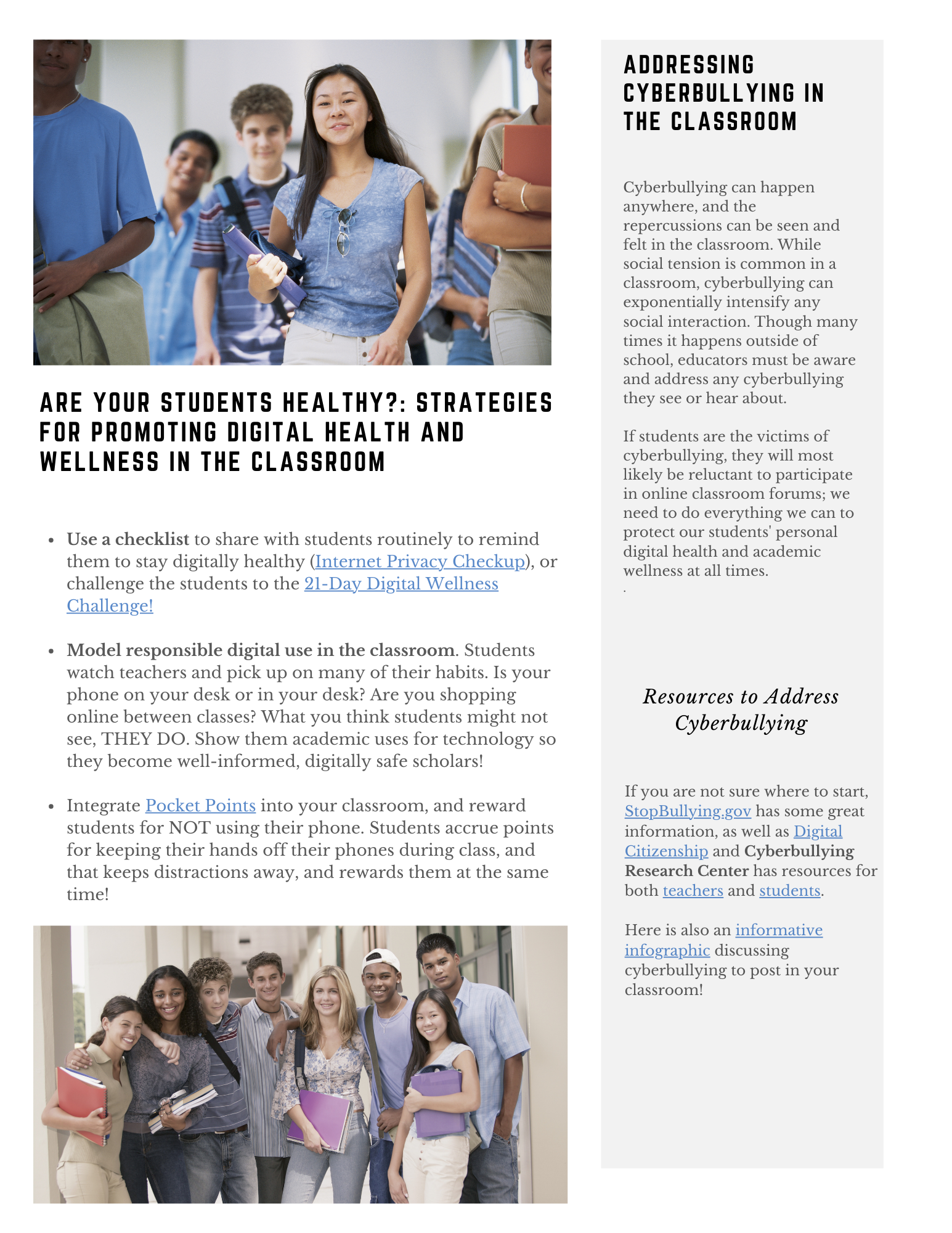
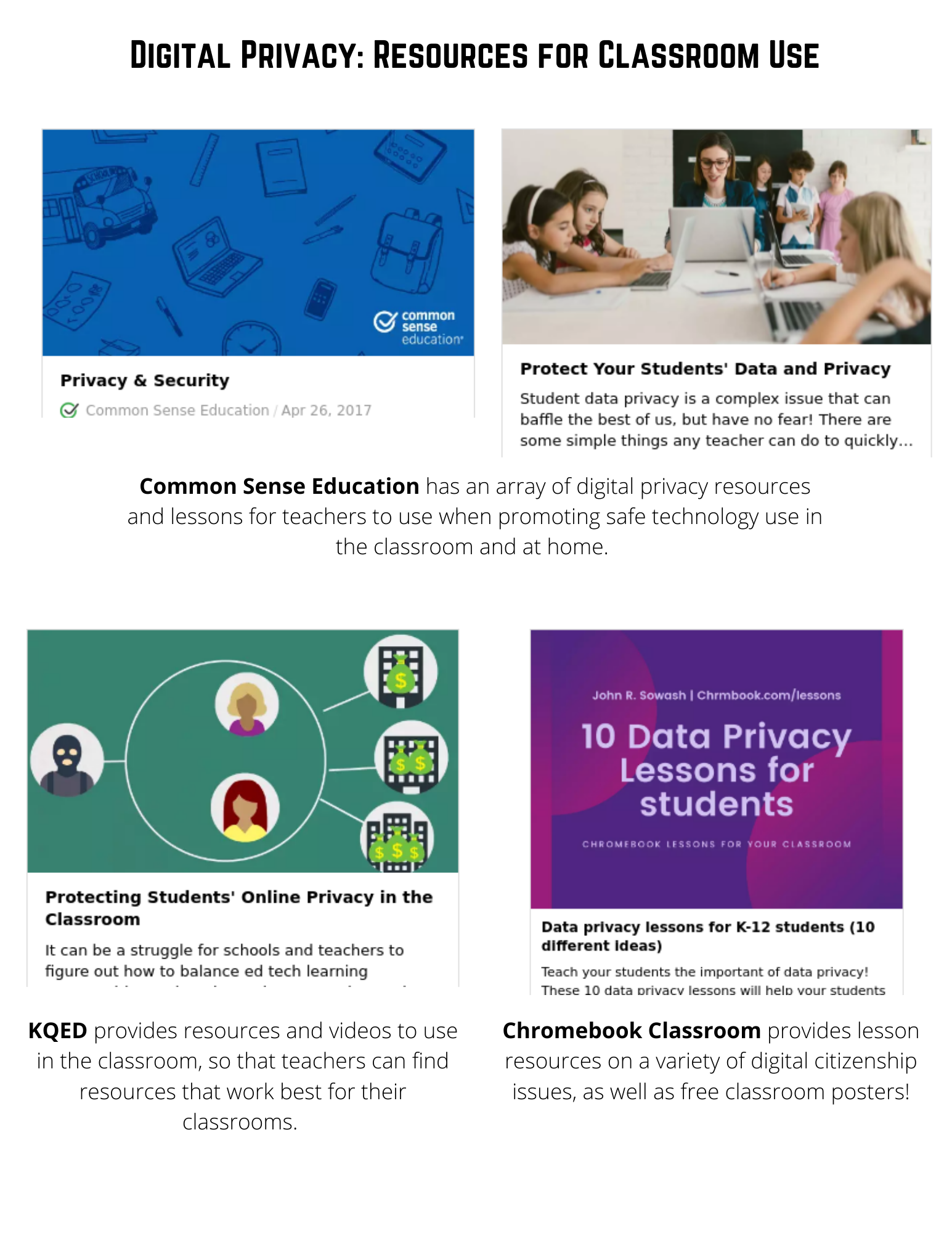
The infographic created in TEC-530: Ethics, Culture, and Equity with Technology addresses best practices for online behavior and technology use; the infographic provides tips and suggestions to teachers as to how to support a healthy and appropriate use of technology both in and outside of the classroom. Besides providing helpful suggestions, the infographic includes various resources for teachers to access to learn more about how to promote digital best practices in the classroom.
Digital Best Practices
ISTE Standard

7b: Partner with educators, leaders, students and families to foster a culture of respectful online interactions and a healthy balance in their use of technology.

7d: Empower educators, leaders and students to make informed decisions to protect their personal data and curate the digital profile they intend to reflect.

Rationale

This artifact represents ISTE Standard 7 in that both coaches and teachers are digital citizen advocates, and we as coaches must be willing to share with teachers, and ultimately students, expectations, and suggestions for how to behave online and interact with others. These expectations are imperative in the classroom (and especially the online classroom) as students are expected to keep an academic demeanor when interacting with their peers. Further, students will carry them to the community and workforce, as they graduate and enter adulthood.

Digital Best Practices
Artifact #5: Information Literacy Research Skills
Information Literacy Research Skills
Description
ISTE Standard/Rationale
The video presentation created in TEC-530: Ethics, Culture, and Equity with Technology shares strategies and activities to use with various levels of students (K-3, 4-8, 9-12), so that students build information literacy as they navigate the online world. For each grade level, suggestions are given as to support and build students’ skills in identifying both reliable and unreliable sources. The presentation also leaves teachers additional resources to use in the classroom as needed.
Information Literacy Research Skills
ISTE Standard

7c: Support educators and students to critically examine the sources of online media and identify underlying assumptions.

Rationale

This artifact represents ISTE Standard 7 in that coaches and educators should constantly be working to support students in their analysis and interpretation of online resources. Giving students the analytical skills to critically consider what they find online is a skill that is important not only for education but for their adult life. By scaffolding learning over the course of their education, educators can equip students with the skills to be critical thinkers; those skills will serve them in both their personal and professional life.

Information Literacy Research Skills
Artifact #6: Ethical Implementation of Technology for Personalized Learning: Safe Technology Use Infographic – Digital Tools
Ethical Implementation of Technology
for Personalized Learning
Description
ISTE Standard/Rationale
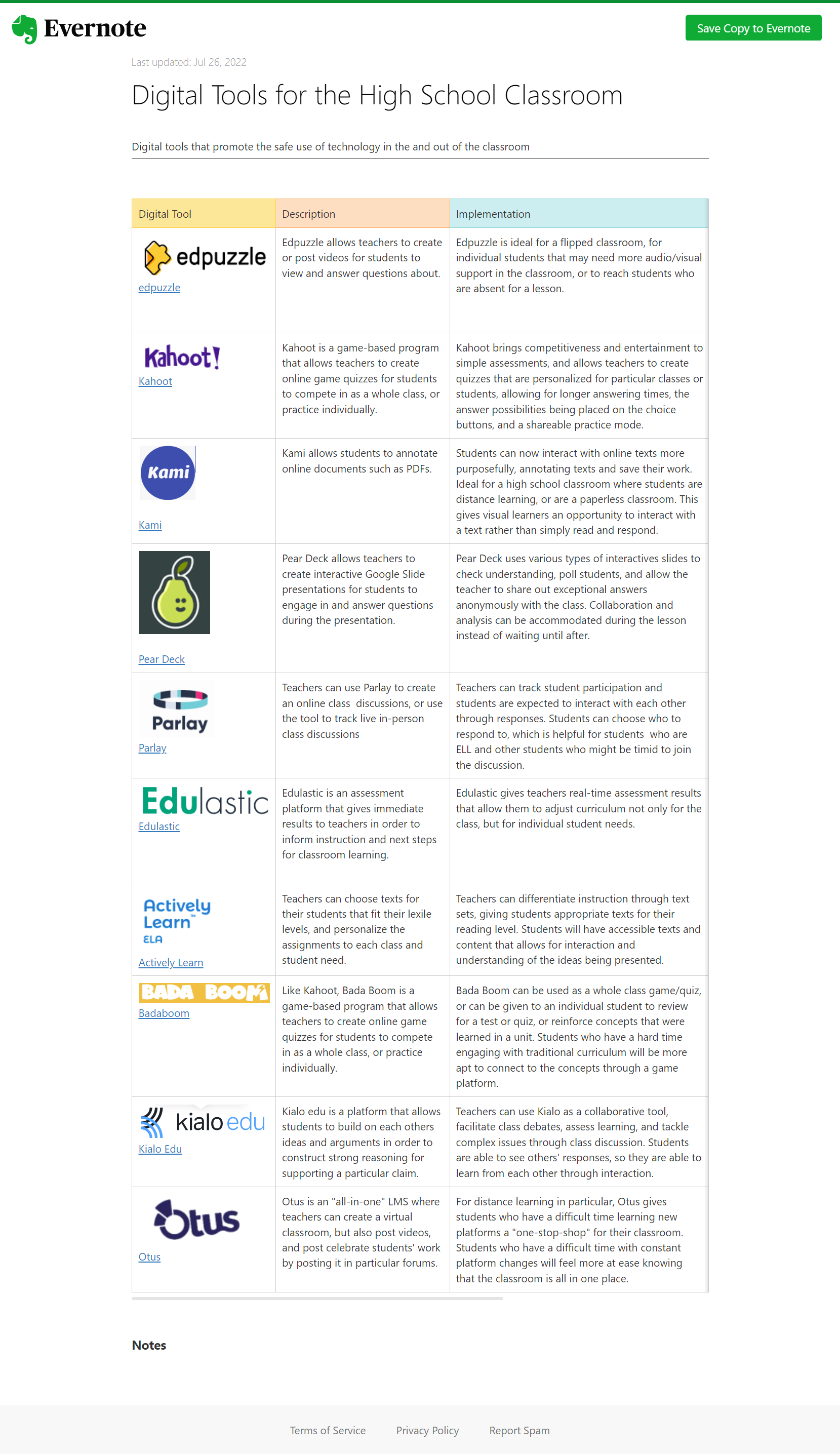
The infographic created for TEC 521: Digital Literacies, Virtual Tools and New Media shares a list of safe school- and student-friendly digital tools and programs for classroom use. These tools do not ask for students to provide any identifying information, and are safe for students to use both in class and at home. While not an exhaustive list, the infographic gives teachers an understanding of what they should look for in safe digital tools.
Ethical Implementation of Technology
for Personalized Learning
ISTE Standard

7d: Empower educators, leaders and students to make informed decisions to protect their personal data and curate the digital profile they intend to reflect.

Rationale

The infographic represents ISTE Standard 7 in that coaches should support educators in choosing safe digital tools and programs that enhance and improve student learning. Coaches and educators should support students in their appropriate use of technology to keep them safe while online. Educators must also maintain awareness of the digital tools and programs that they themselves use, and how the tools promote safe digital tool use to the students.

Ethical Implementation of Technology
for Personalized Learning
Dinuba, CA 93618
Contact Janice
userschevron-down